Homemade Panettone Recipe with Raisins & Orange Peel
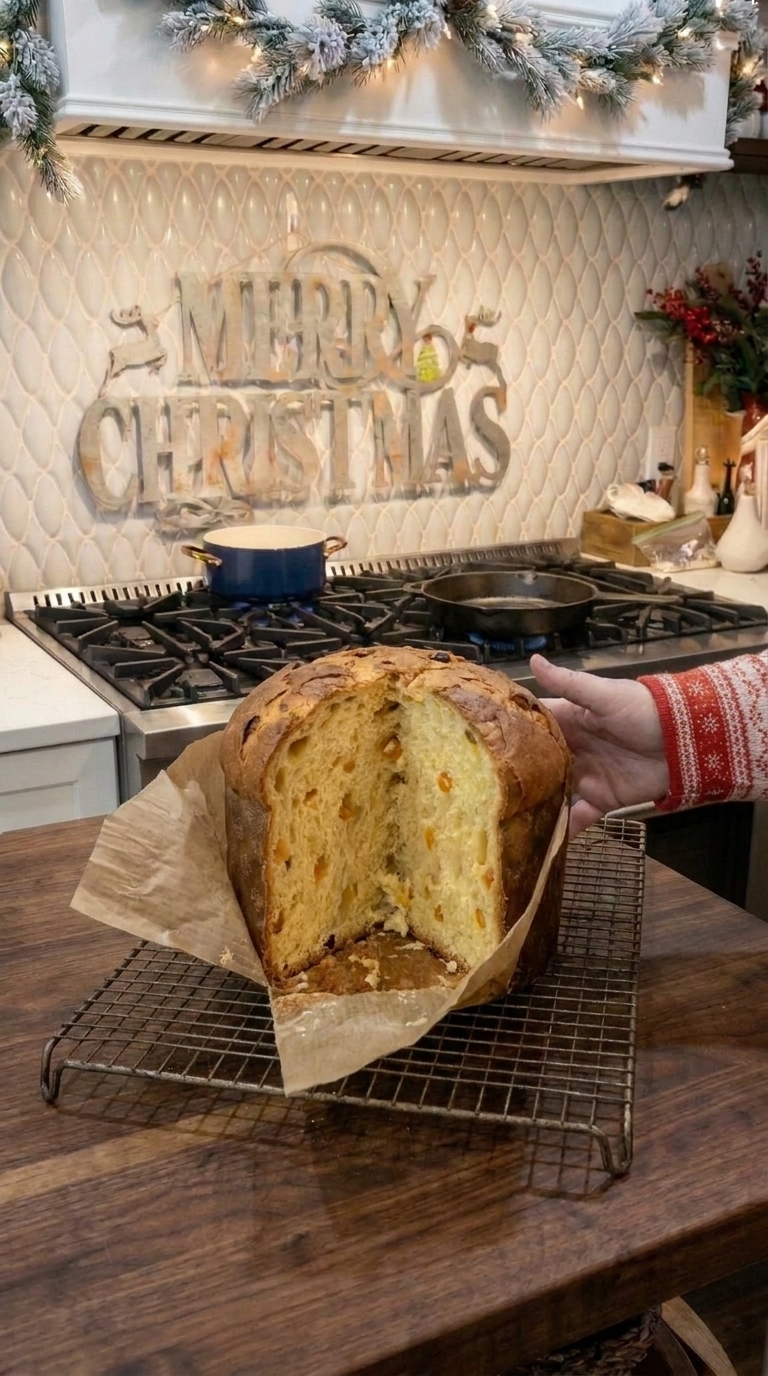
A homemade version of a festive favorite
Panettone is a rich sweet bread, with butter, eggs, and sugar mixed into the dough. Raisins and candied orange peel add little bursts of fruit, while orange and lemon zest bring a fresh citrus aroma.
Traditional panettone can involve a natural starter and a more elaborate process. This approachable version uses commercial yeast, but it still benefits from thorough kneading, patient proofing, and careful cooling.
- One tall loaf for approximately twelve slices.
- An overnight dough rest fits a two-day baking schedule.
- Fruit and citrus are folded through an enriched, buttery dough.
Ingredient and mold notes
Use comfortably warm milk to activate the yeast; hot milk can damage it. Soften the butter before adding it gradually to the dough. If raisins feel dry, soak them briefly in warm water, then drain and dry them thoroughly.
Choose an oven-ready panettone mold with enough capacity for the full batch and room for expansion. Mold dimensions and capacity vary. If yours is too small, divide the dough between suitable molds and adjust baking time rather than packing it in.
Develop the dough before the fruit goes in
Enriched dough can be sticky at first. Let the mixer develop it before adding large amounts of extra flour. Once the butter has been incorporated, continue kneading until the dough looks smooth and stretches into a thin membrane before tearing.
Fold the raisins and candied peel in gently after the first rest. Shape a smooth ball and place it seam-side down in the mold. A lightly floured surface helps with handling without drying the dough.
Watch the rise, not just the clock
Butter and sugar can slow yeast activity, and cold dough needs time to warm. For the final rise, look for a noticeably puffy dough approaching the mold’s rim. The estimated two to three hours may need to be extended in a cool kitchen.
Bake until the dome is golden and the center is baked through, checking with a thermometer. Tent loosely with foil if the surface browns early. A tall, delicate loaf benefits from supported inverted cooling; set up secure supports before baking so they are ready.
Serving and storage
Cool the loaf completely before slicing so the interior can stabilize. Serve plain with coffee or tea, or lightly toast a slice and spread with butter. Firmer leftover slices work well in bread pudding or French toast.
Keep cooled panettone tightly wrapped at room temperature for up to three days. Freeze individual slices or a wrapped portion for up to two months. Thaw while wrapped, then refresh slices gently if desired.
Frequently Asked Questions
Why is my dough slow to rise?
Enriched dough rises more slowly than plain bread dough, especially when cold. Check that the yeast is active and let the dough become visibly puffy before baking.
Can I replace the raisins?
Dried cranberries can replace the raisins for a fruit variation. Keep pieces small and avoid adding excess moisture.
Why should I wait before slicing?
The warm crumb is delicate and can compress or appear gummy if cut too soon. Full cooling helps it hold its structure.
Recipe card
Homemade Panettone
A buttery, citrus-scented holiday loaf filled with raisins and candied orange peel.
Equipment
- Stand mixer with dough hook
- Large mixing bowl
- Suitably sized oven-ready panettone mold
- Instant-read thermometer
- Sturdy skewers and stable supports for inverted cooling
Ingredients
Enriched dough
- 1/2 cup milk, warmed to about 100–110°F (38–43°C)
- 2 1/4 teaspoons active dry yeast
- 1/3 cup granulated sugar, divided
- 3 large eggs, at room temperature
- 1 teaspoon vanilla extract
- 1 tablespoon finely grated orange zest
- 1 tablespoon finely grated lemon zest
- 3 1/2 cups all-purpose flour
- 1 teaspoon salt
- 1/2 cup unsalted butter, softened
Fruit and finish
- 1 cup raisins
- 1/2 cup candied orange peel, cut into small pieces
- Small pat of butter for the top, optional
Instructions
- Activate the yeast
Combine the warm milk, yeast, and 1 teaspoon of the measured sugar in the mixer bowl. Rest for about 10 minutes, until foamy. - Start the dough
Add the remaining sugar, eggs, vanilla, and both zests. Mix, then add the flour and salt. Use the dough hook on low speed until a rough dough forms. - Add butter and knead
Add softened butter about 1 tablespoon at a time, allowing each addition to blend in. Continue kneading for about 10 minutes, or longer as needed, until smooth and elastic enough to stretch into a thin membrane. - Rest overnight
Place in a lightly greased bowl and cover. Refrigerate for 8–12 hours. The dough may rise slowly and does not have to double in the refrigerator. - Add the fruit
If soaking dry raisins first, drain and pat them dry thoroughly. Gently deflate the dough and fold in the raisins and candied peel until distributed. - Shape and proof
Shape into a smooth ball and place seam-side down in a suitably sized paper mold. Cover loosely and let rise in a warm, draft-free place until puffy and near the rim, about 2–3 hours or longer. Cold dough may take additional time. - Bake
Heat the oven to 350°F (175°C). Score a shallow X on top and add the optional small pat of butter. Bake for about 40–45 minutes, or until golden and the center reaches approximately 190–195°F (88–91°C). Timing depends on mold size and dough quantity; tent with foil if browning too quickly. - Cool completely
For a tall, delicate loaf, use sturdy skewers through its lower portion and secure supports to suspend it upside down without touching the counter. Let cool completely before removing the supports and slicing.